

Blog
Guides, comparisons, and stories from interview rooms
Long-form articles on interview prep, AI copilots, and the messy reality of finding a job in tech.
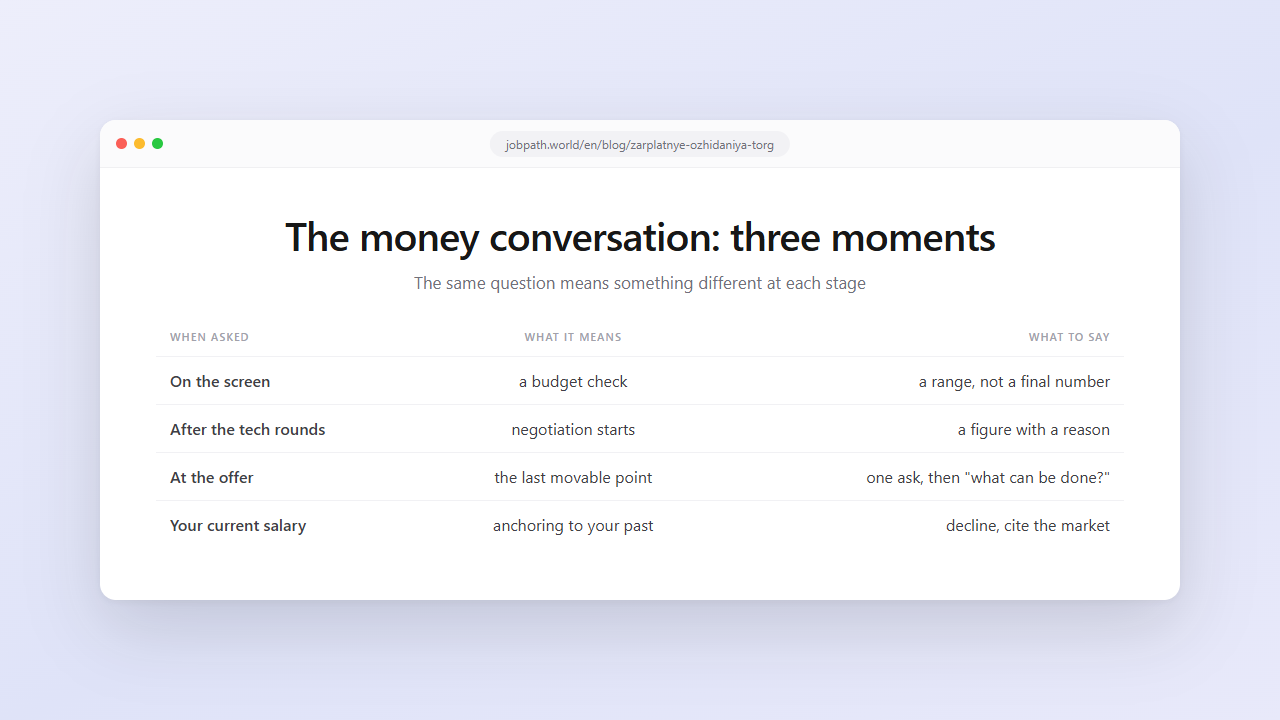
Salary expectations: what to say and how to negotiate
The expectations question comes up three times in a process and means something different each time. What to say at each point, how not to name a number first, and what's negotiable when base pay is capped.
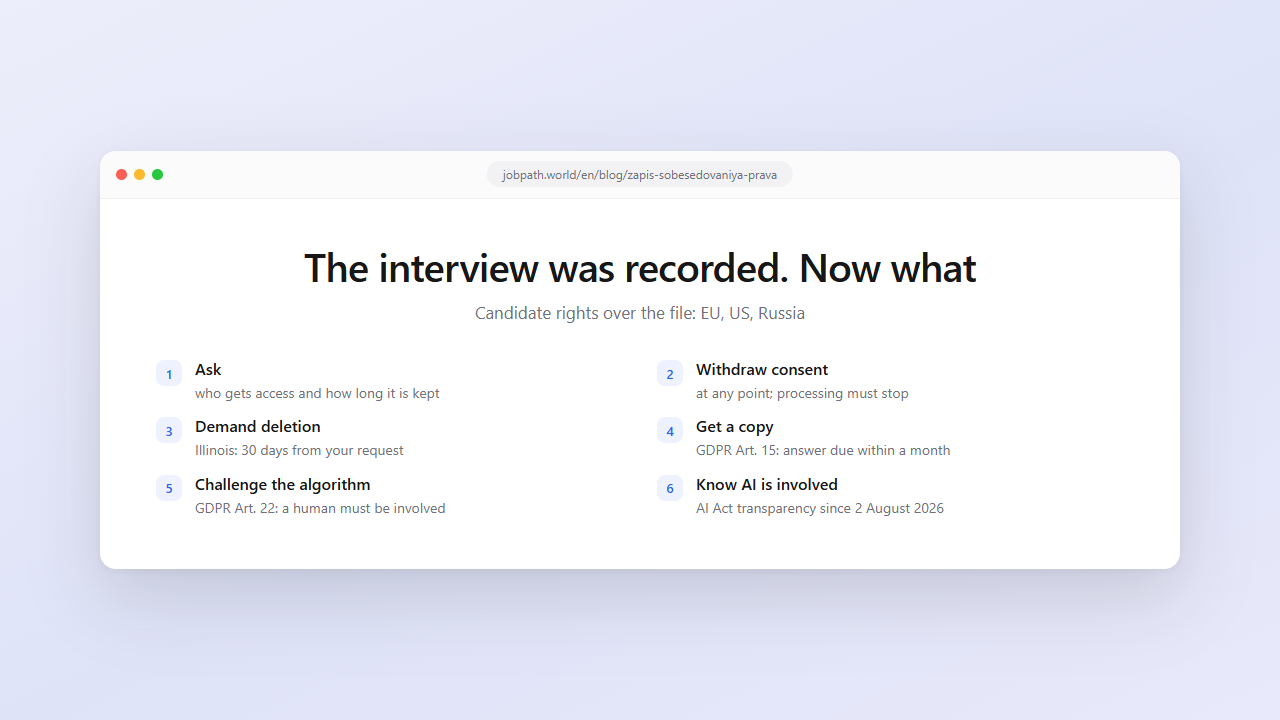
Your interview is recorded: what happens to the file, and your rights
Recording an interview is normal and usually lawful. What candidates rarely know is the rest: how long the file lives, how to have it deleted, and — in the EU — the right to a human review of an automated rejection.
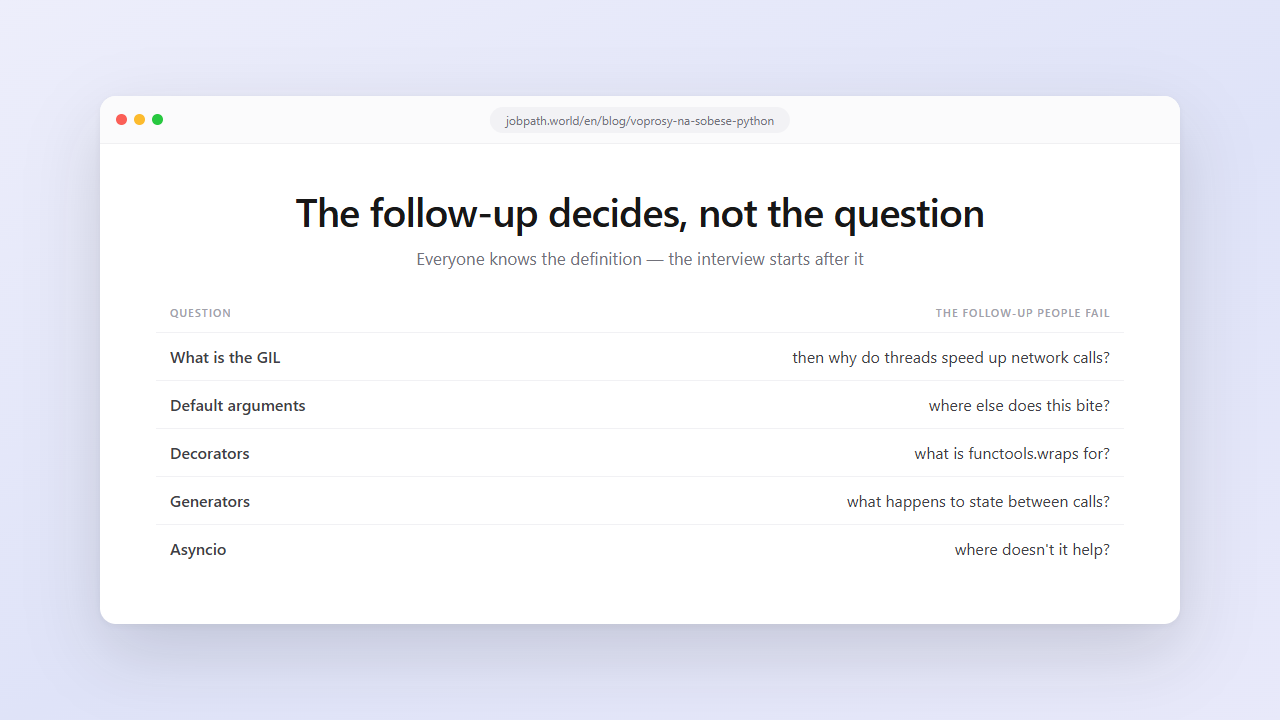
Python interview questions and where candidates fall apart
Everyone knows the definition from the docs. What eliminates candidates is the follow-up: "fine, then why do threads speed up API calls if there's one GIL?" The questions by level, with those follow-ups.
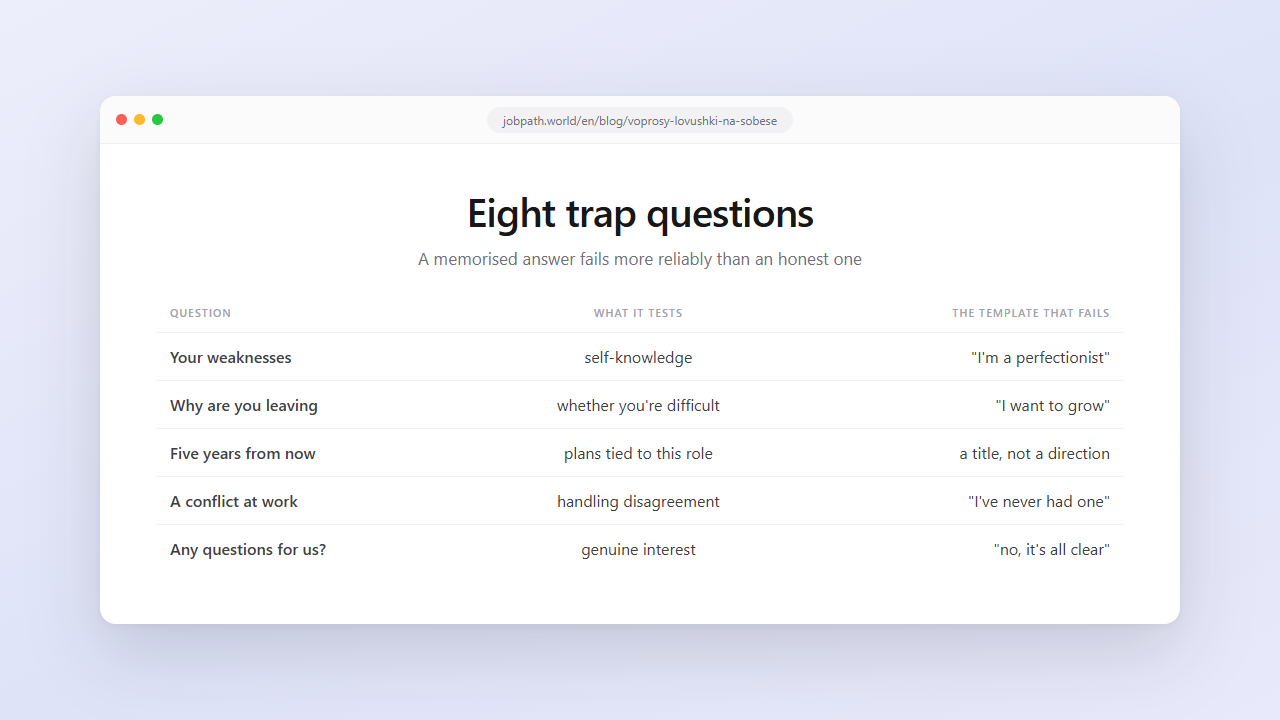
Interview trap questions: eight classics and how to answer them
"What's your greatest weakness" doesn't test weaknesses. It tests whether you have a working model of yourself. Eight questions everyone gets asked, and the shape of an answer for each.
Jobs in Telegram channels: how the market works and how to avoid scams
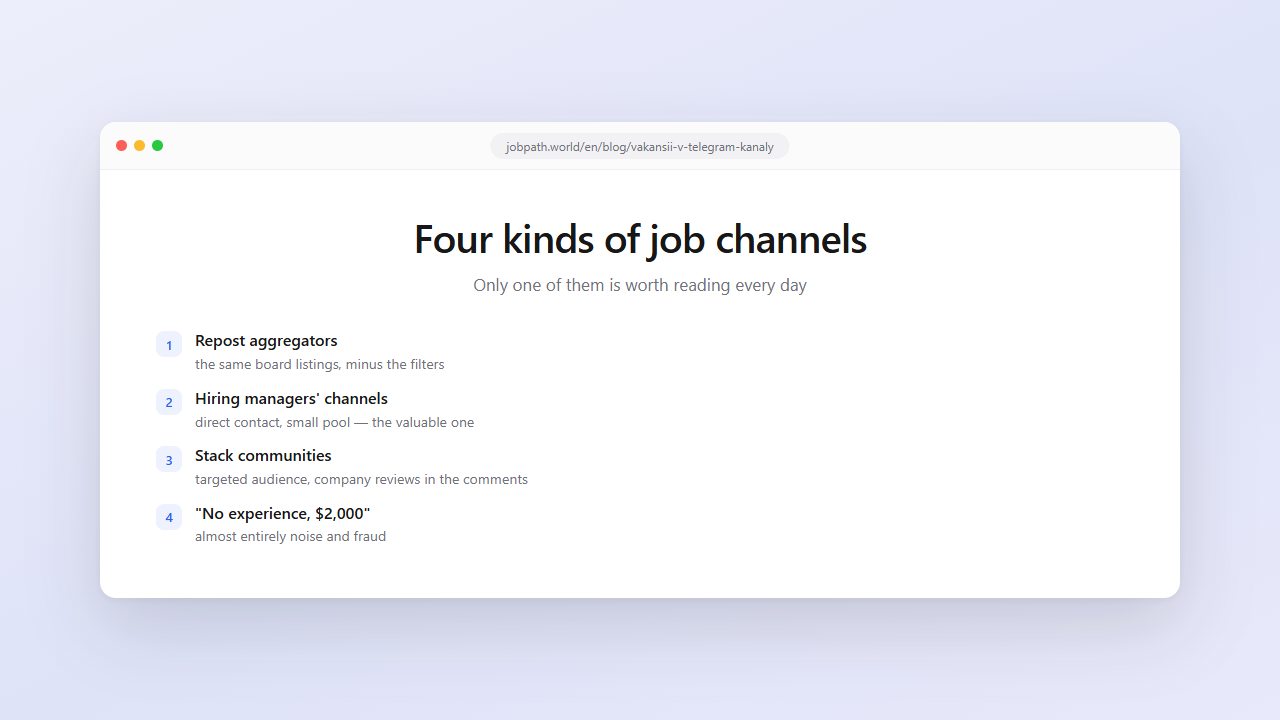
A share of roles never reaches the job boards: they're posted in channels and filled within days. What kinds of channels exist, how to tell a real posting from noise, and what to write in the first message.
System design: how to think out loud when you're not an architect
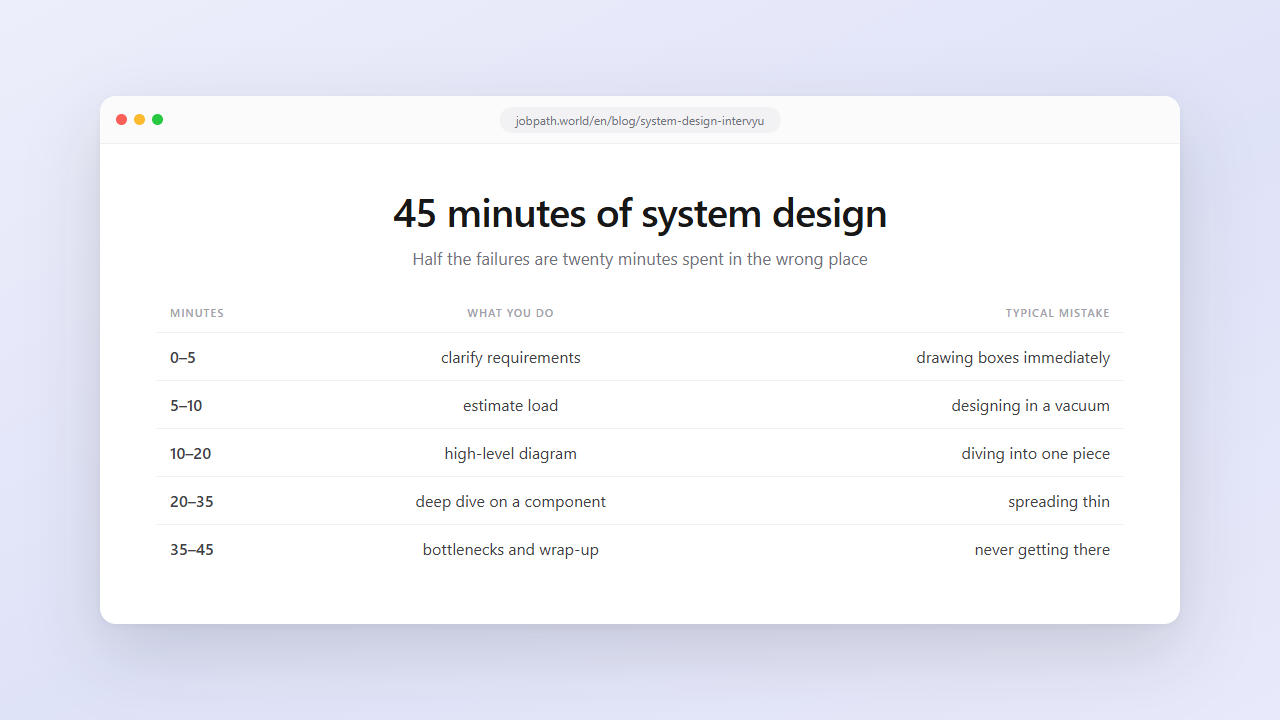
System design doesn't grade the right answer — there isn't one. It grades how you narrow a vague problem, how you estimate, and whether you name trade-offs out loud. The round, minute by minute.
Cover letters: 7 templates and the phrases that kill them
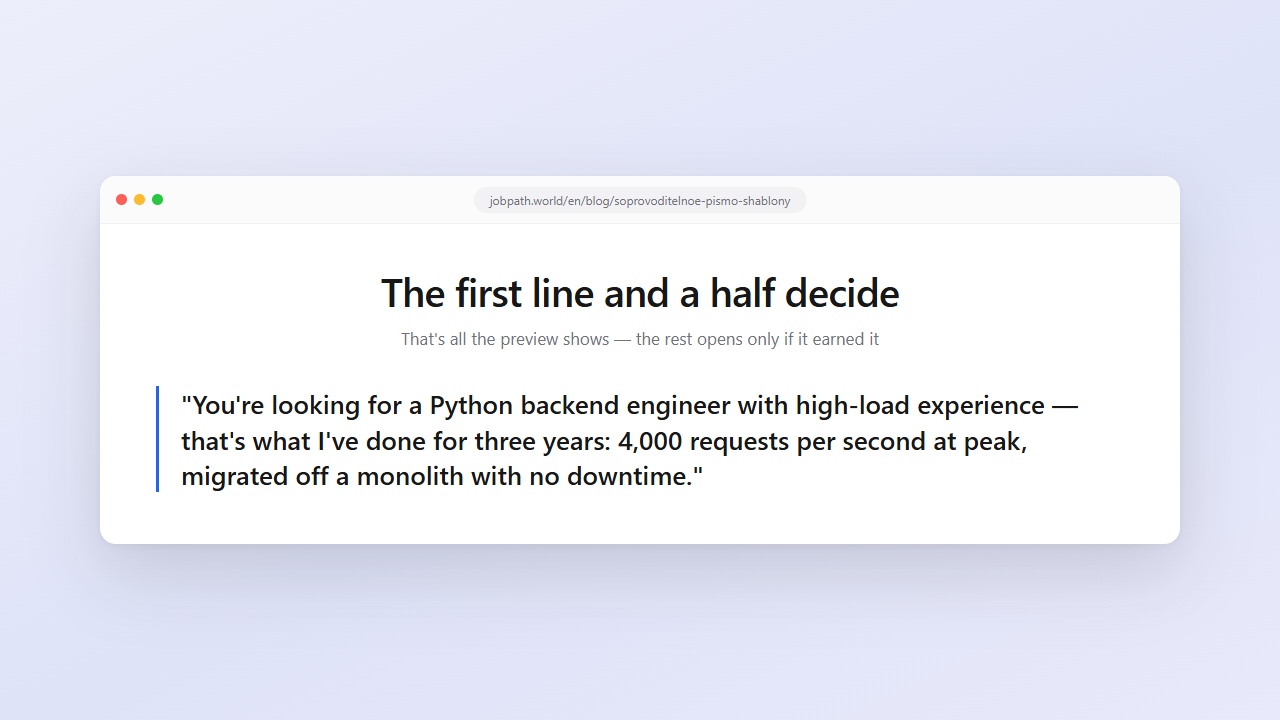
A recruiter sees the first line and a half of your letter in the application list preview. Everything after that gets read only if those lines earned it. Seven templates and the phrases that waste them.
How many job applications a day: limits and pacing
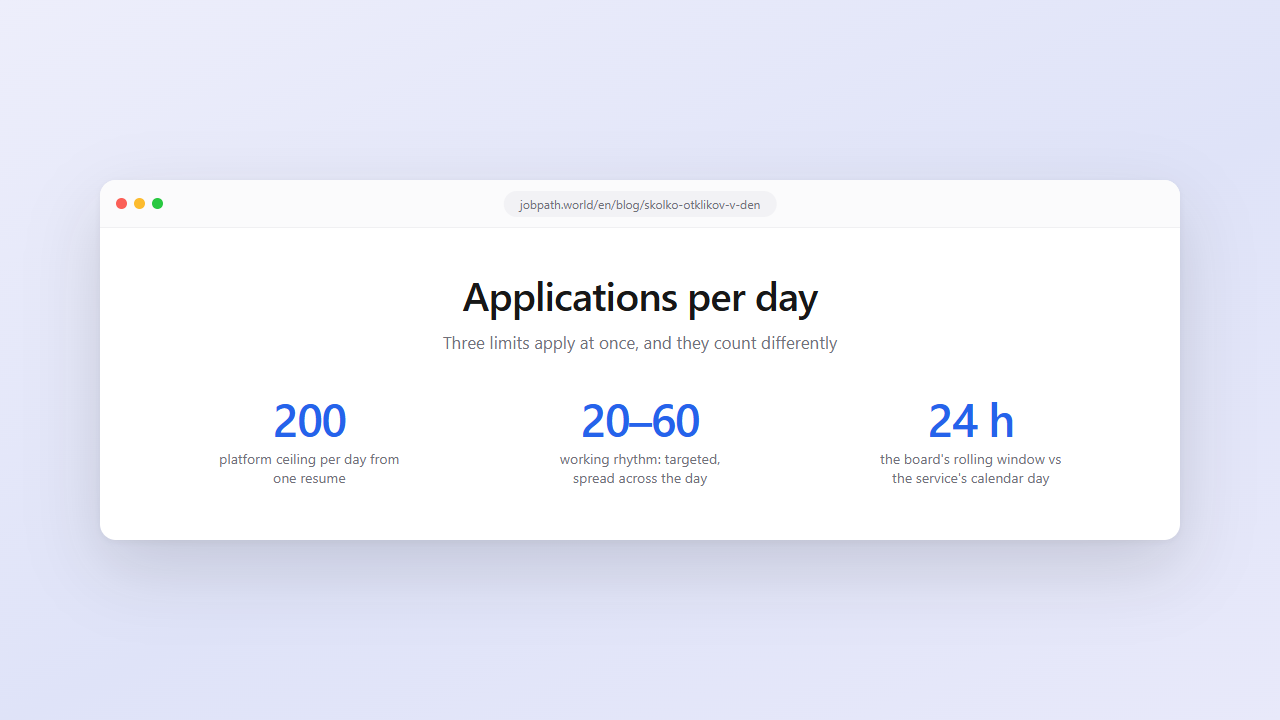
The ceiling is around 200 applications a day from one resume, but hitting it isn't winning. What over-sending actually triggers, why the counter can lie, and how many applications you really need.
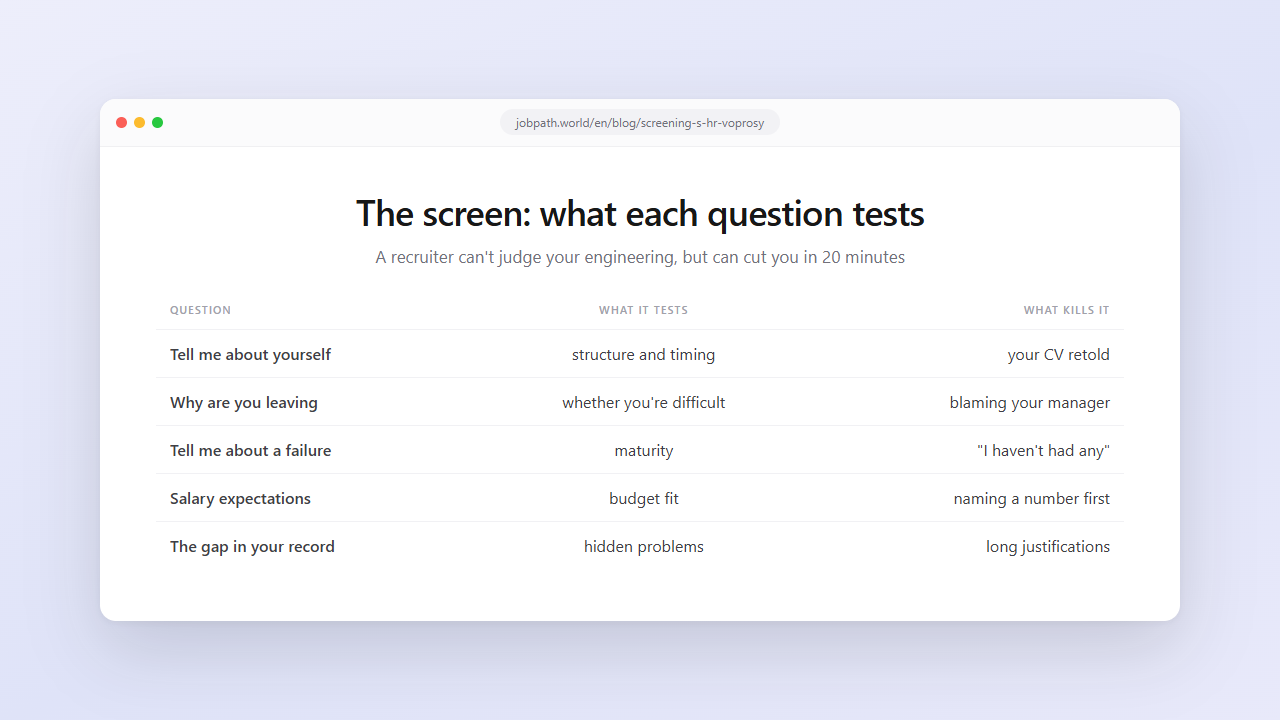
The recruiter screen: 20 questions and what each one is really testing
A recruiter usually can't judge your engineering. They can absolutely cut you — on money, timing, motivation and inconsistencies in your story. Twenty questions, what each tests, and the answers that end the call.
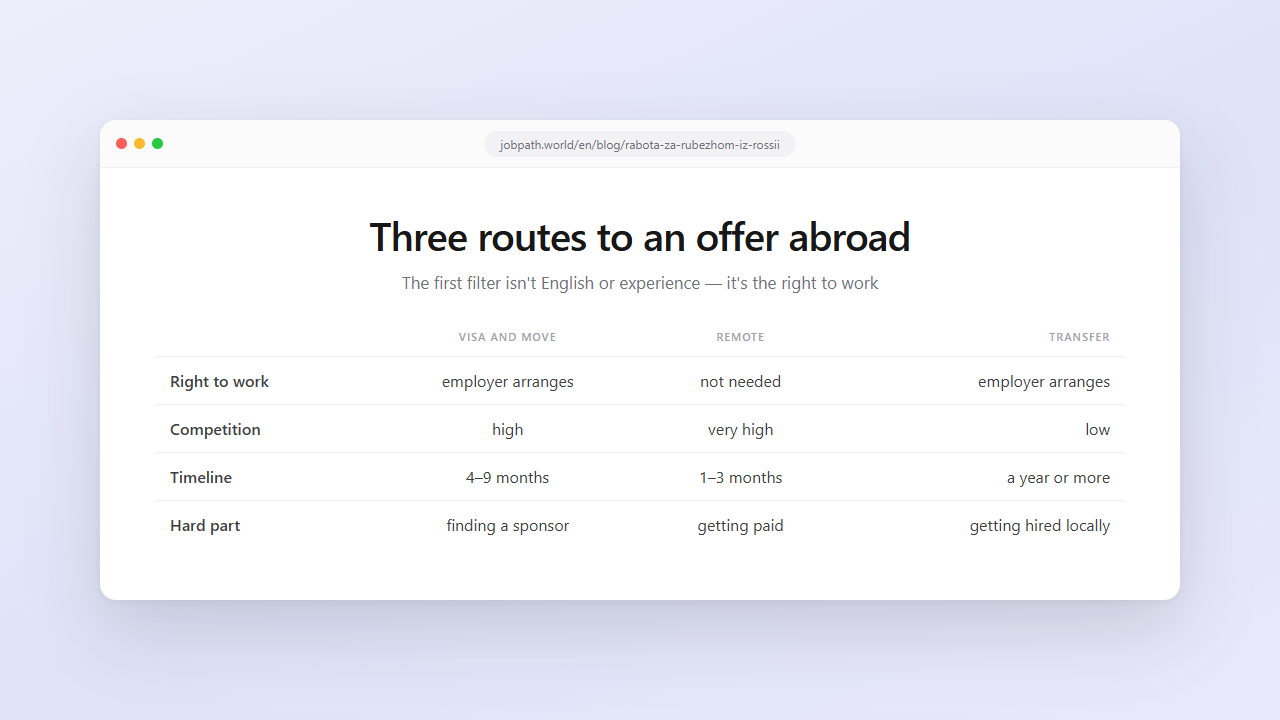
Working abroad in 2026: three routes and real timelines
The first filter isn't your English or your experience — it's the right to work in the country. Three realistic routes, the 2026 Blue Card thresholds, how to rebuild a CV for international hiring, and how long this actually takes.
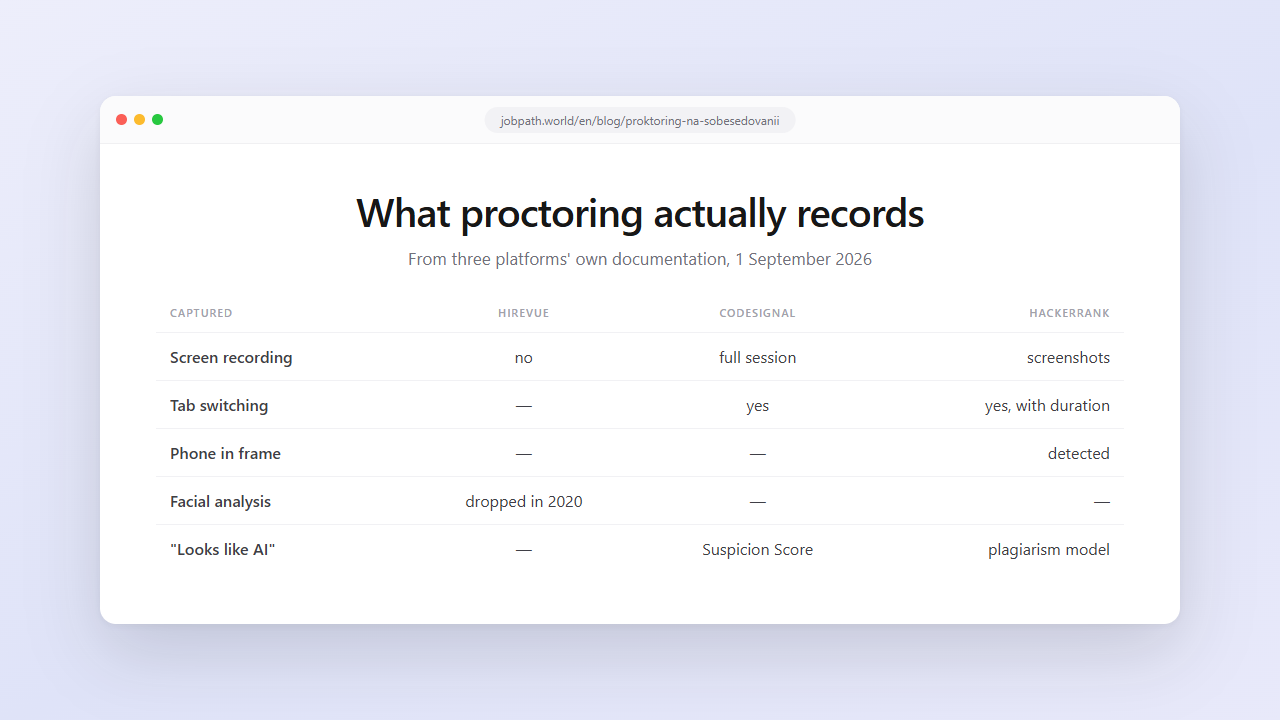
What HireVue, CodeSignal and HackerRank actually record
An online assessment and a Zoom call are different genres. One officially records your screen, camera and tab switches; the other records nothing. Here's what each of the three big platforms captures, from their own documentation.
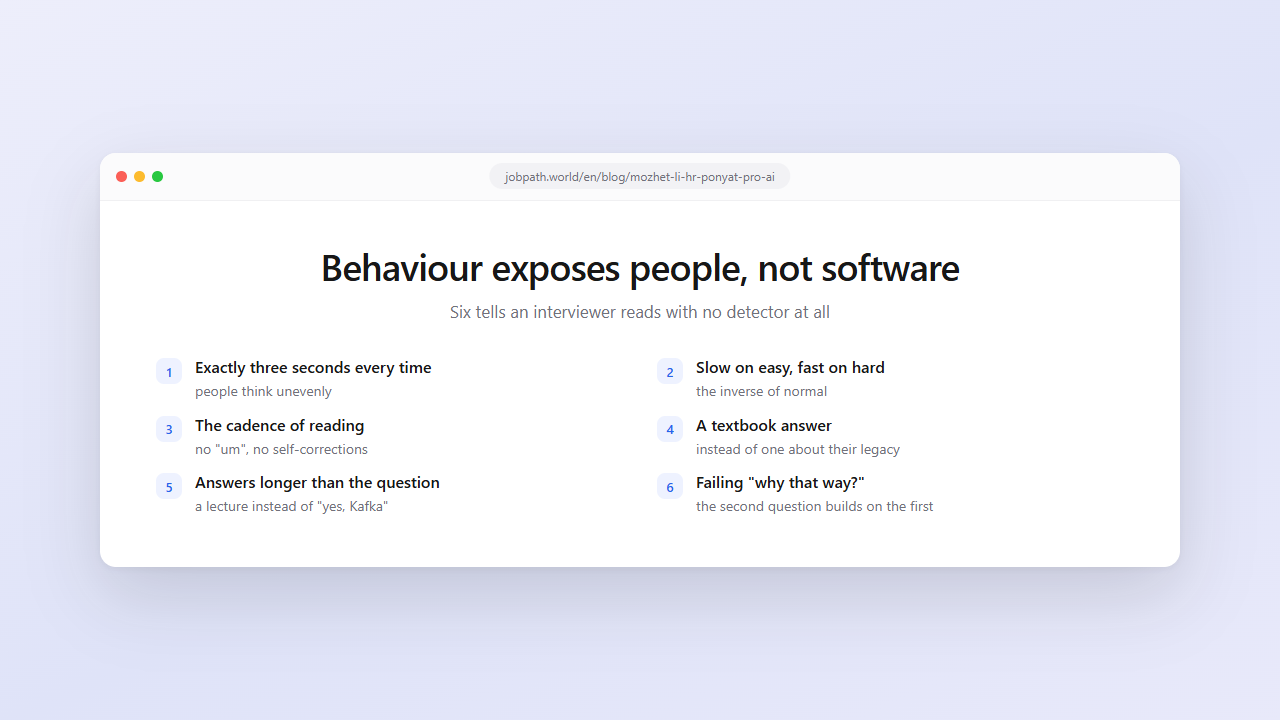
Can an interviewer tell you're using AI? Nine tells
There's no reliable AI detector for a conversation — not in Zoom, not in hiring platforms. There are nine behavioural tells an experienced interviewer reads without any software, and eight of them are about the person, not the program.
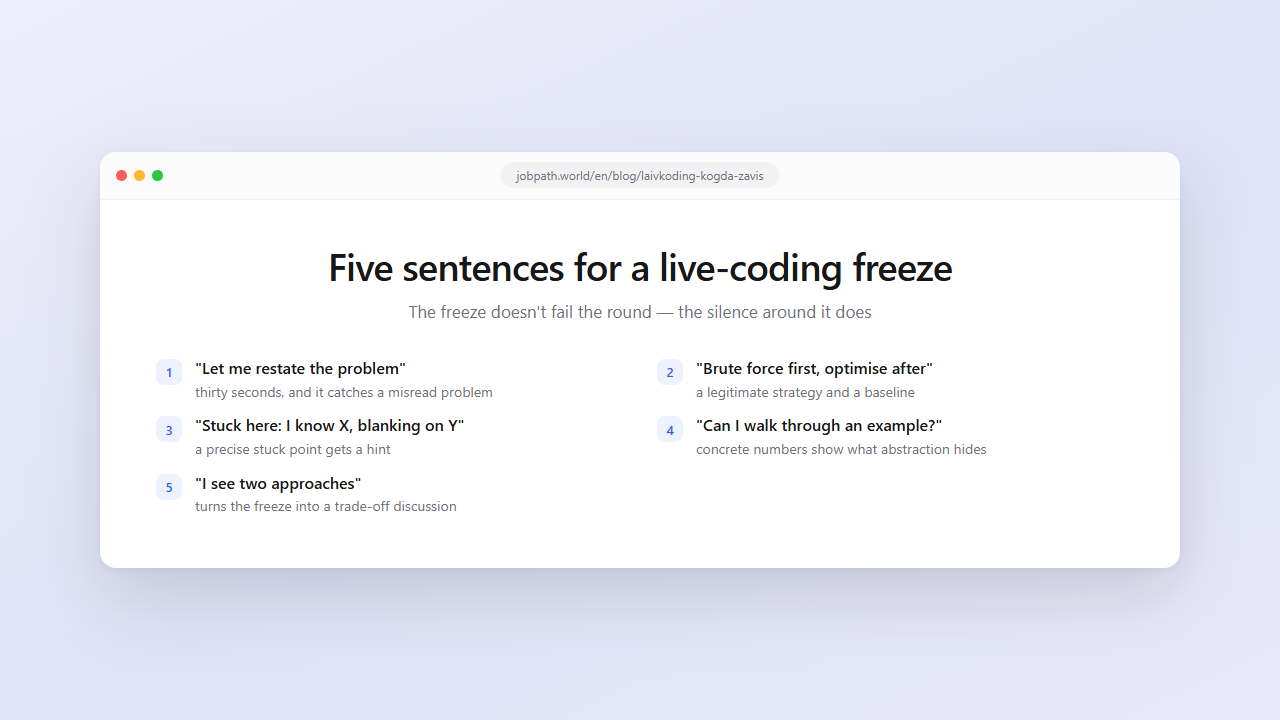
Live coding: five sentences for when you freeze
Freezing happens to everyone, senior engineers included. What fails the round is the silence around it: the interviewer can't see your thoughts and has to interpret the pause. Five sentences that turn a freeze into a conversation.
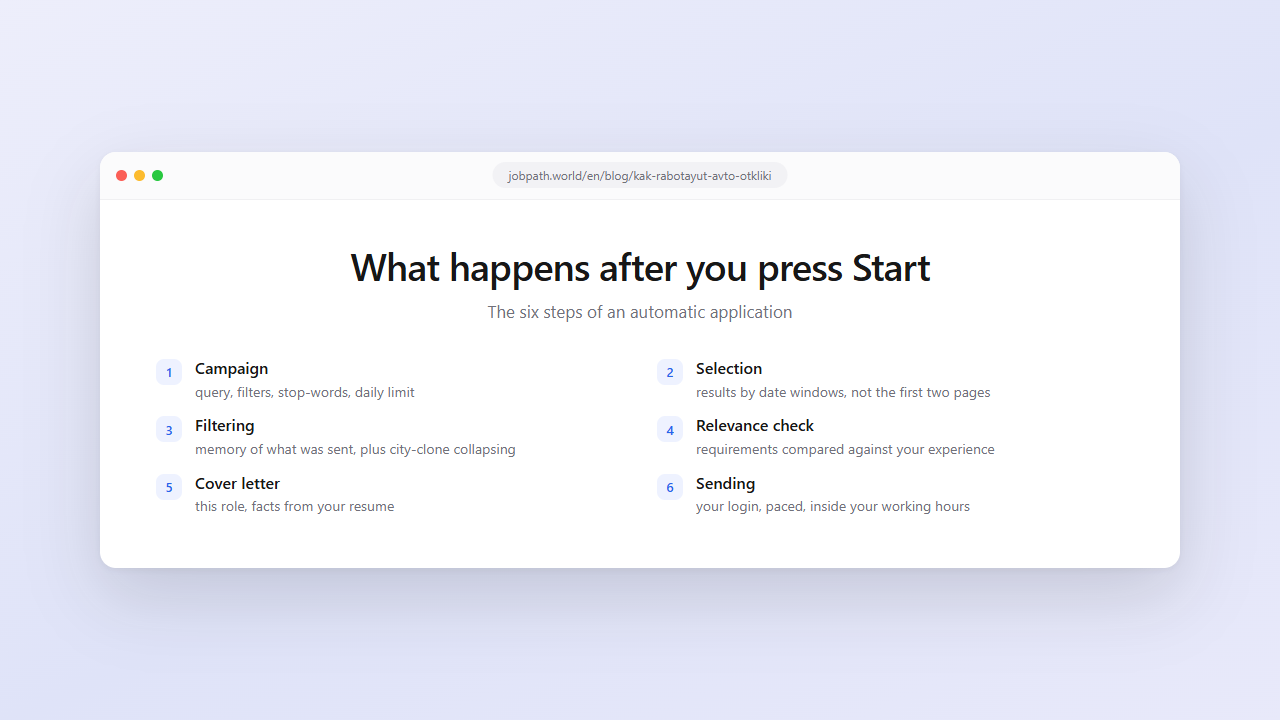
How automatic job applications actually work, step by step
"A bot applies on my behalf" sounds alarming until you see what actually happens. The full path from pressing Start to an application sitting in your own account — and the lines a service shouldn't cross.
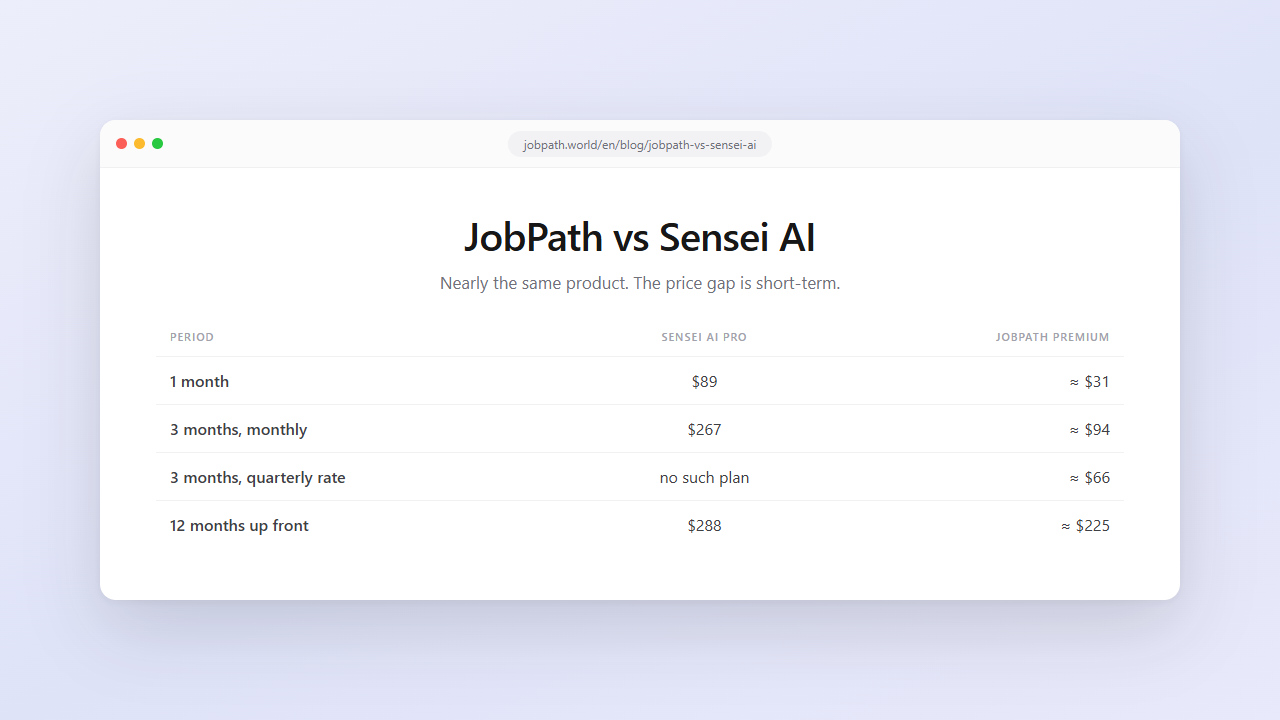
JobPath vs Sensei AI: three differences that decide it
Of all the western copilots, Sensei AI looks most like us: both have a free entry point (15-minute sessions there, 15 minutes a month here) and similar resume tooling. Which makes the feature table boring and the details interesting — price, lock-in, and the promises one of us makes and the other won't.
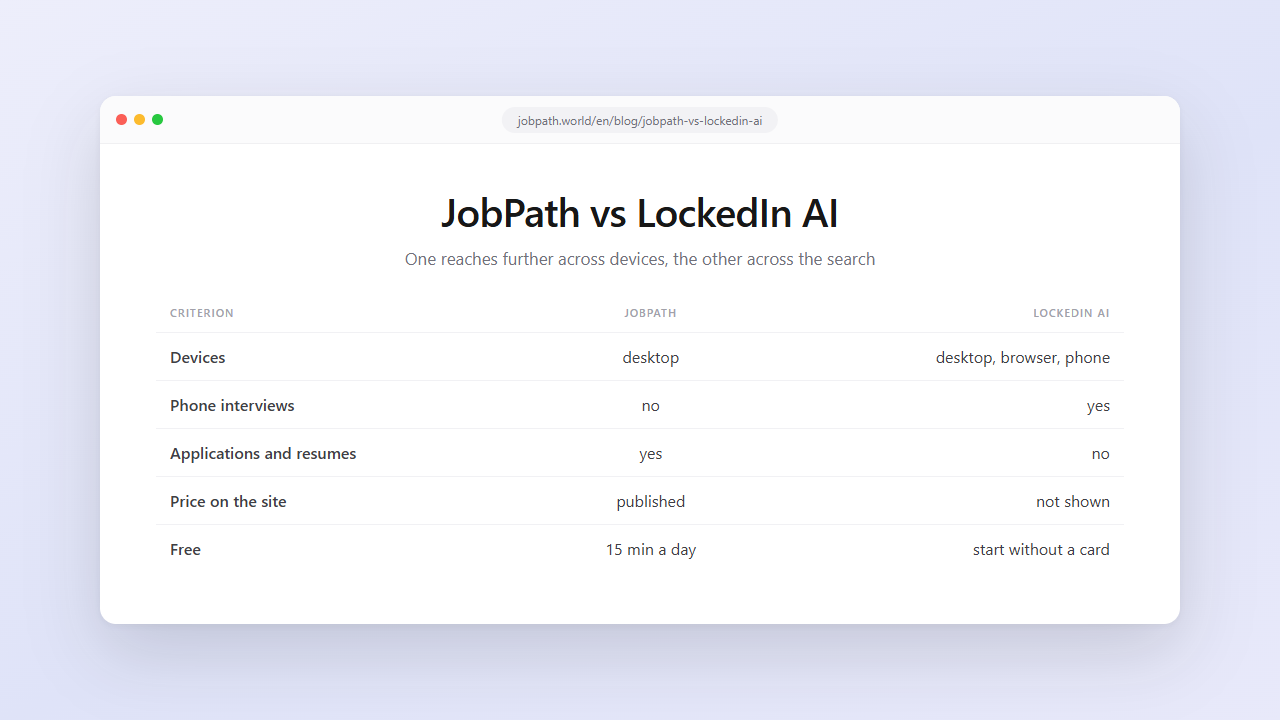
JobPath vs LockedIn AI: where the copilot ends
LockedIn AI reaches further across devices and assessment formats, including phone screens and online assessments. JobPath reaches further backwards, into everything that happens before the interview. Including where we lose.
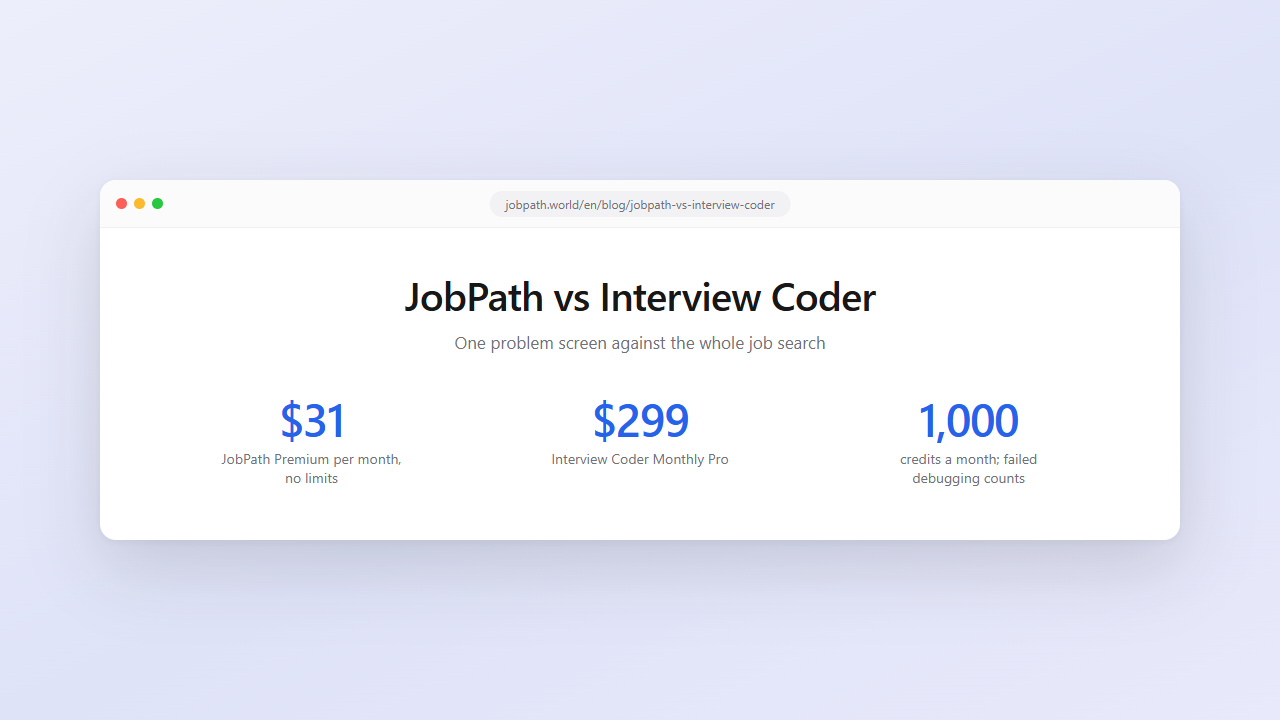
JobPath vs Interview Coder: one screen versus the whole job search
Interview Coder is built around one screen — the one with a coding problem on it. JobPath covers the road to the offer. The price gap between them is roughly tenfold, and not in the direction you'd guess.
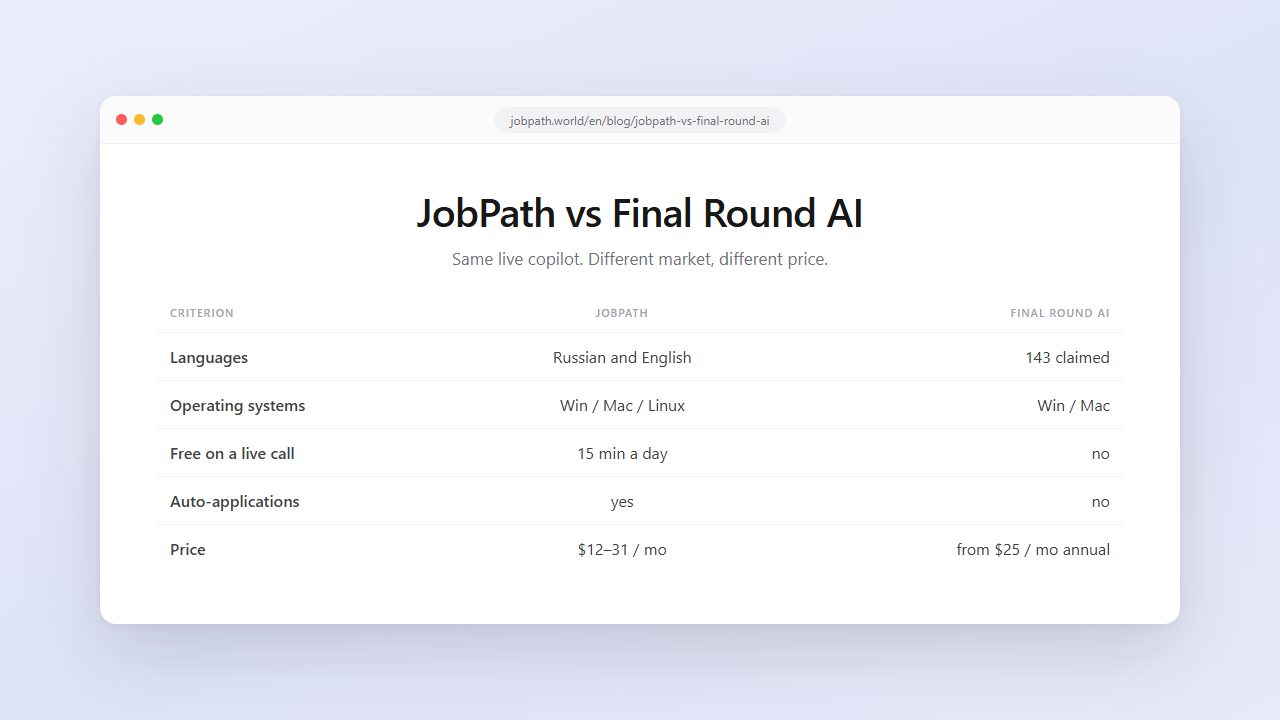
JobPath vs Final Round AI: which copilot fits which candidate
Both tools do the same thing: listen to the interviewer and put an answer on your screen. They differ in the market they were built for — and that single question decides the choice faster than any feature table.
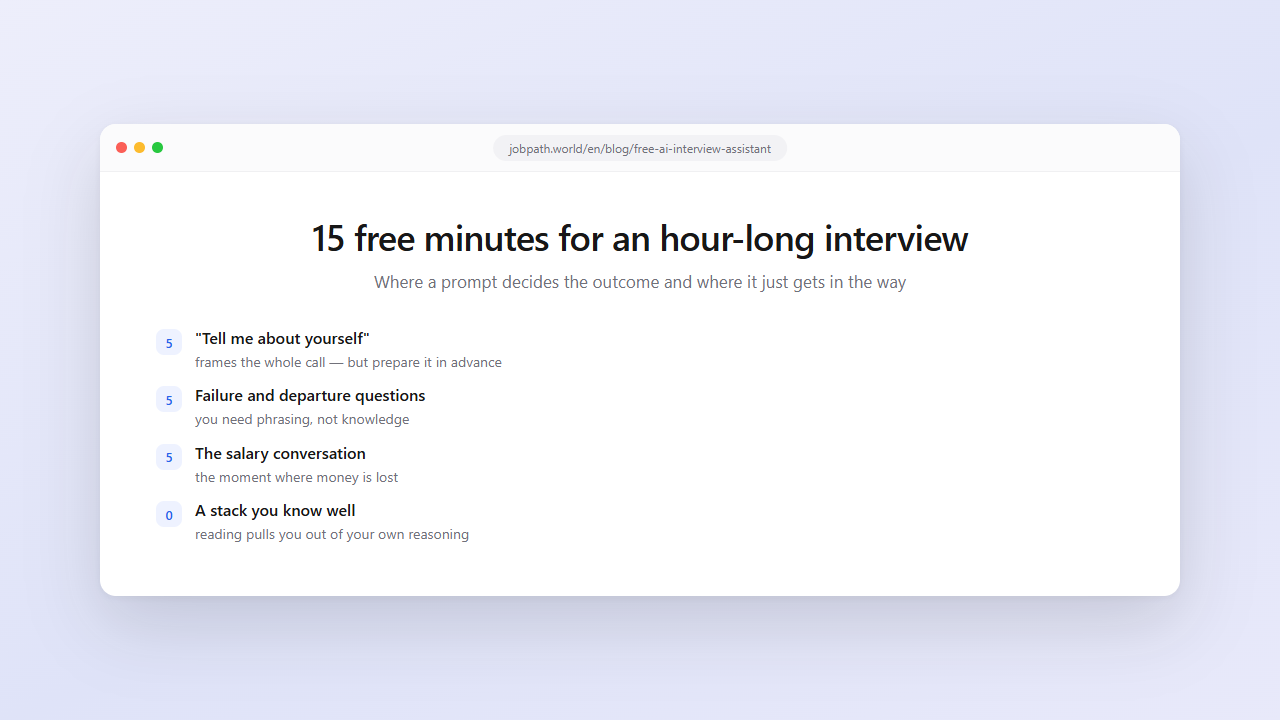
Free AI interview assistant: what a $0 plan actually gives you
"Free" means four different things on copilot websites — a live copilot, preparation only, a download, or nothing at all. Here's who gives what, and how to get through an interview on zero.
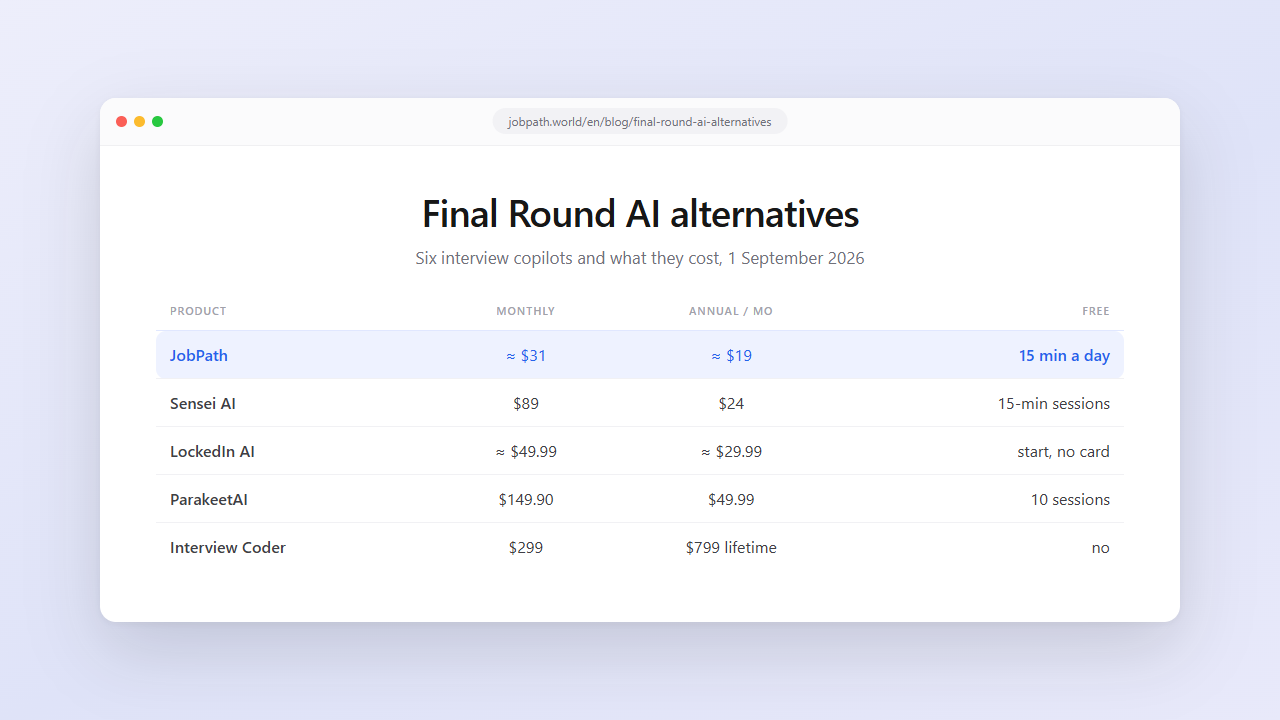
Final Round AI alternatives: 6 interview copilots and what they cost
Six products people shop for instead of Final Round AI, with prices as of 1 September 2026. The spread runs from $19.99 to $299 a month for roughly the same function, and quality isn't what explains it.
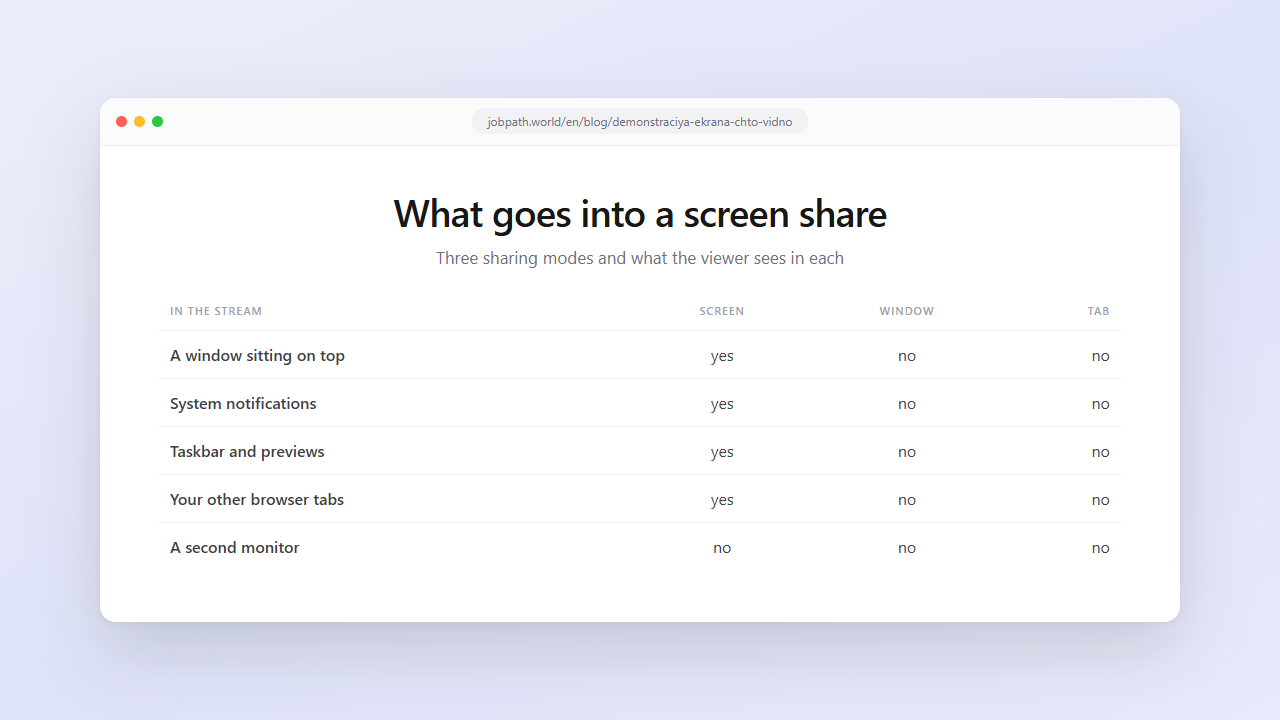
What people see when you share your screen: Zoom, Meet, Teams
Short answer: sharing a window shows only that window, sharing a screen shows everything on that monitor including the notification that just popped up. Three modes, four common leaks and two myths that refuse to die.
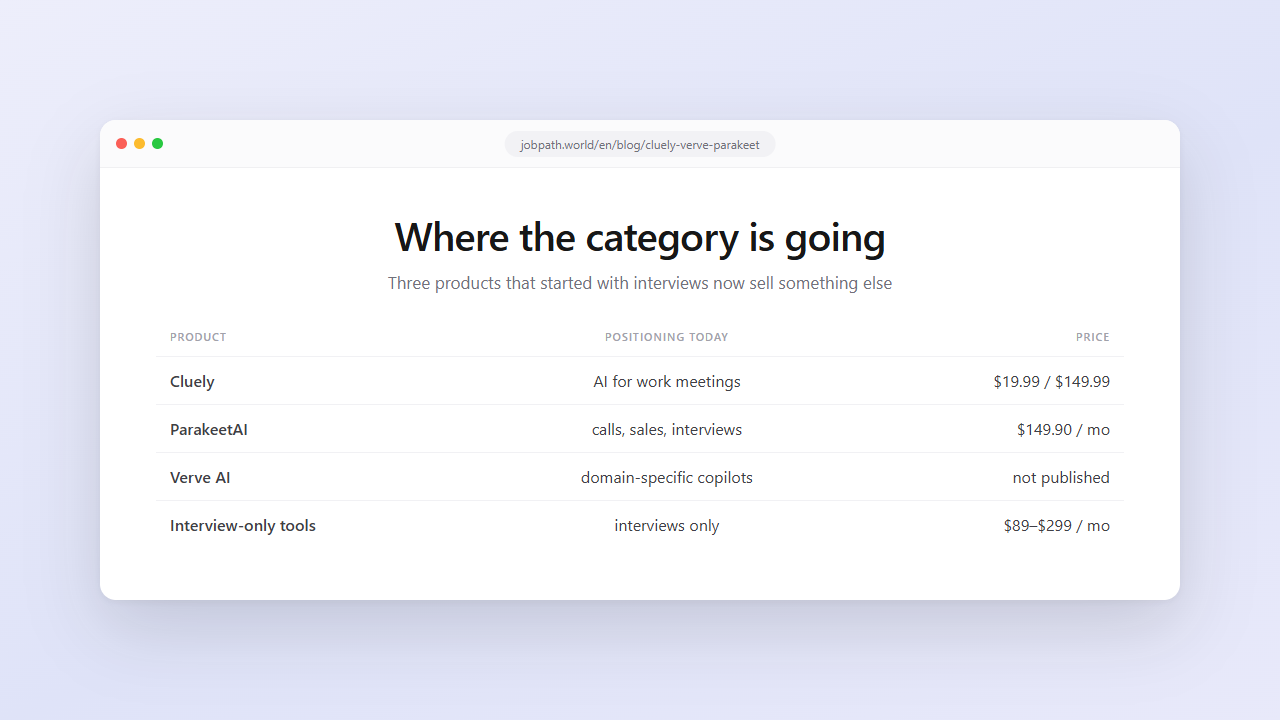
Cluely, Verve AI, ParakeetAI: interview copilots become meeting AI
Cluely, which made its name as an interview helper, now sells meeting AI and doesn't mention interviews on its pricing page. It isn't an isolated pivot — it's the category moving, and it affects candidates more than it looks.
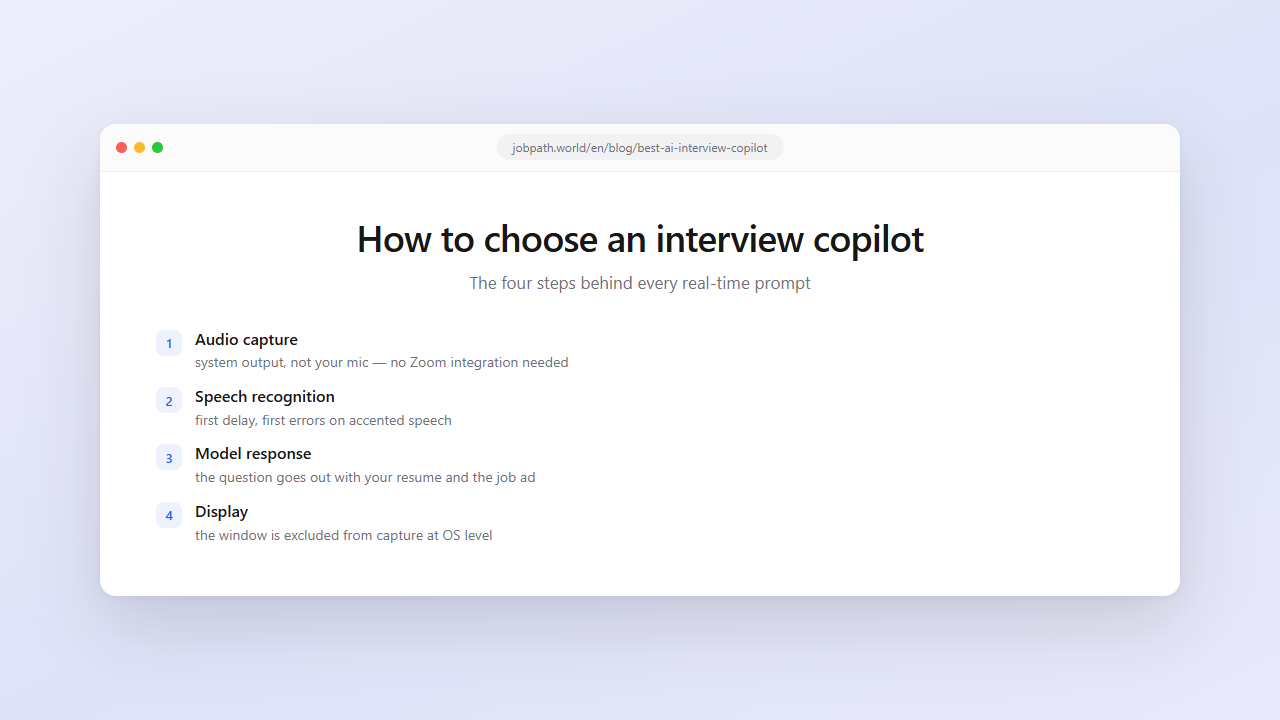
The best AI interview copilot: 7 criteria and a winner per scenario
"Best" depends on the scenario here more than in almost any other software category. How a copilot works inside, the seven parameters that actually change the outcome, and who wins in each situation.
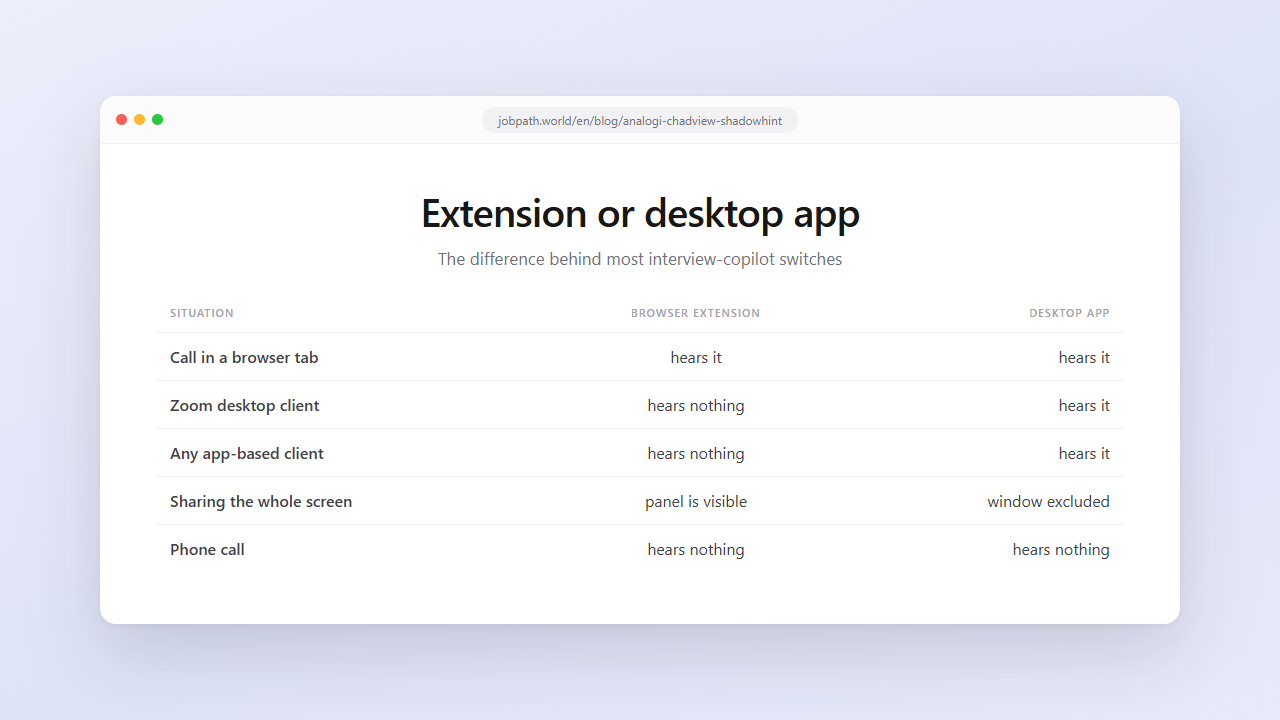
Switching interview assistants: browser extension vs desktop app
People replace an interview assistant for five typical reasons, and most often it comes down to where the app gets the call audio. The difference between an extension and a desktop app, and what to check before switching.
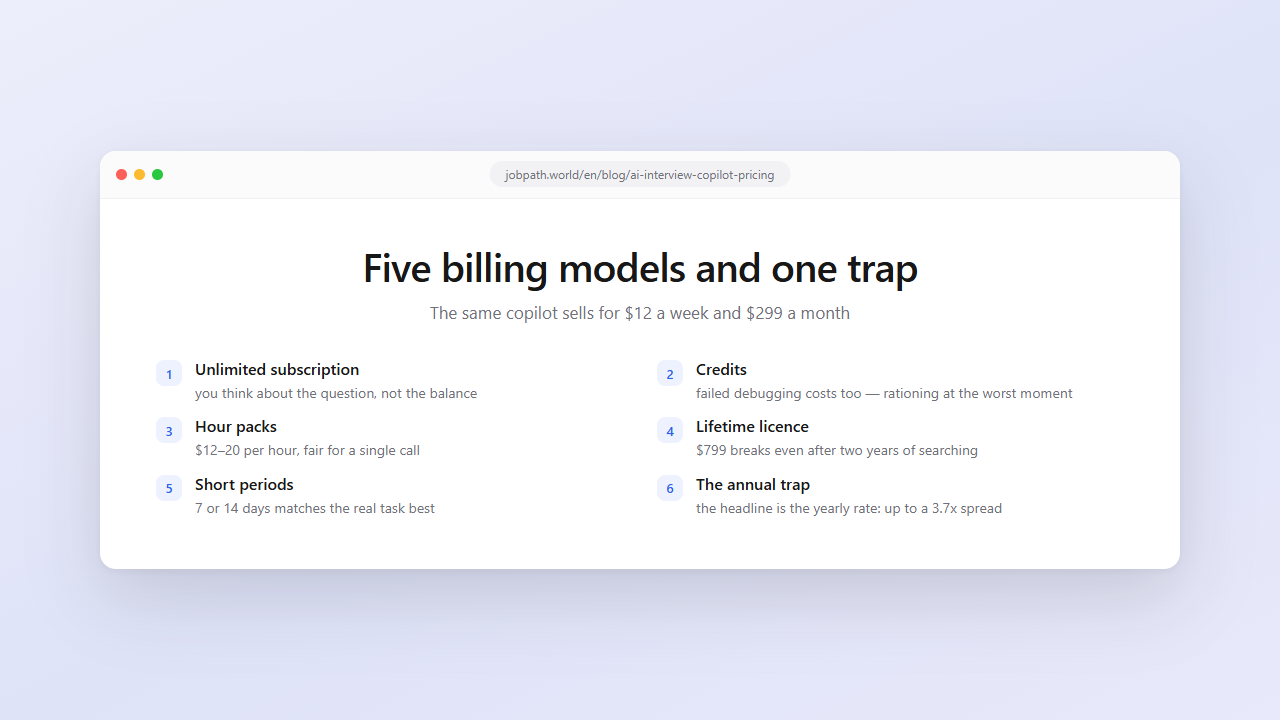
AI interview copilot pricing: 10 services and 5 billing models
The same function sells for $12 and for $299 a month. Five billing models, ten services with dated prices, and a way to calculate the real cost of your search rather than the shop-window one.
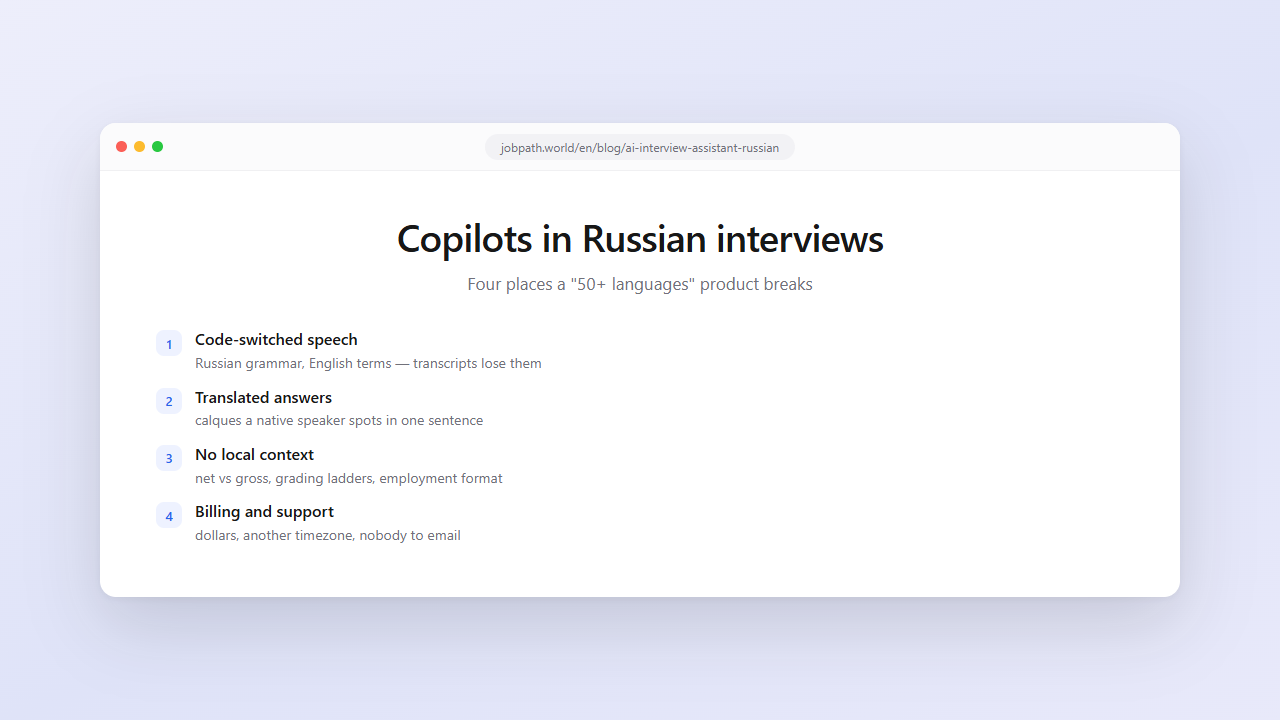
AI interview assistants in Russian: where western copilots break
"Supports 50+ languages" means the model understands the question. In a Russian-language interview that isn't enough: transcription breaks on code-switched speech and answers read like translations. Here's exactly where, and how to test it.
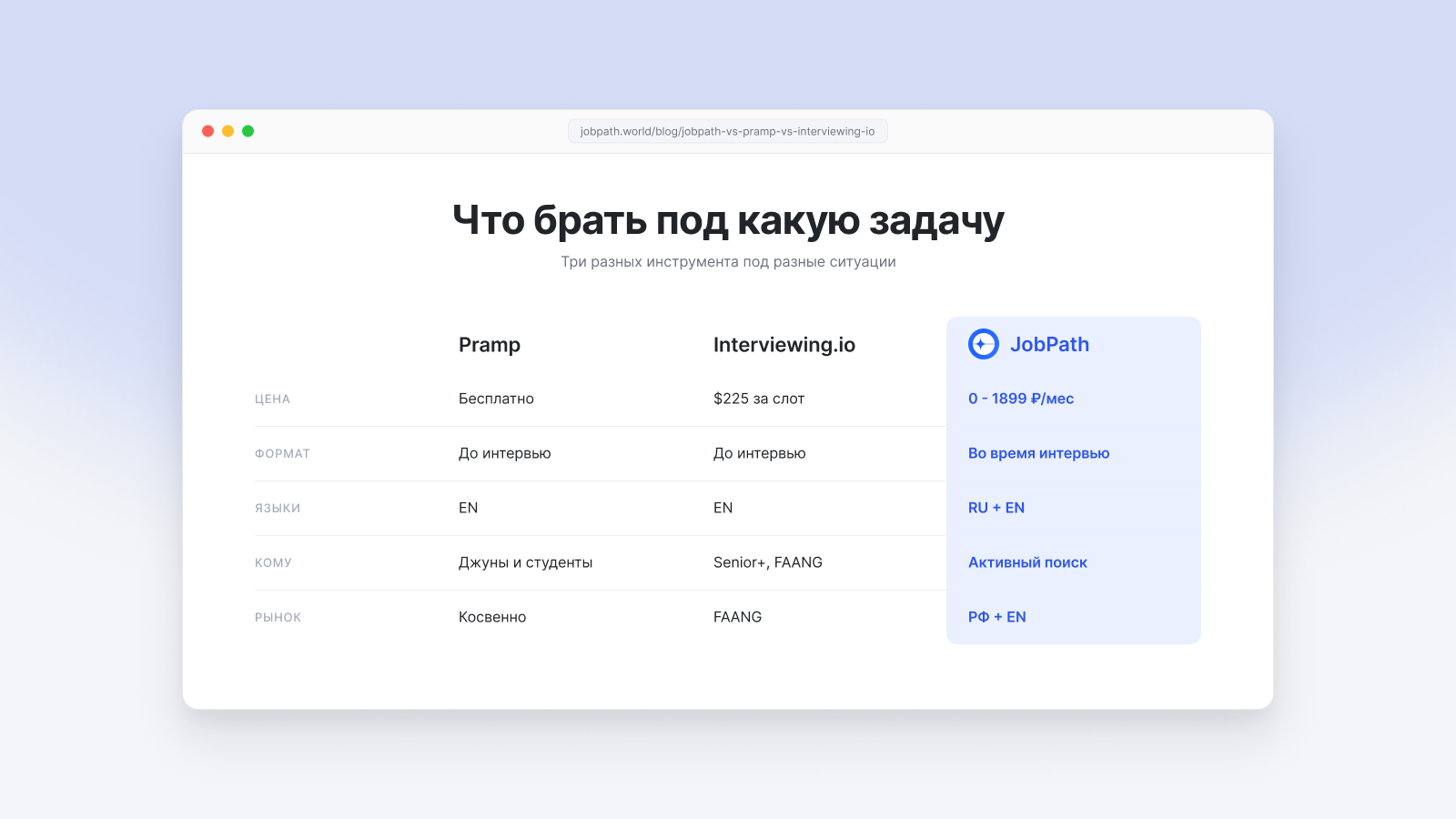
Pramp, Interviewing.io and JobPath: which one actually helps
Three tools, three jobs. Pramp forces you to think out loud under pressure. Interviewing.io rents you a Stripe engineer for $225 per session. JobPath does something stranger: whispers an answer into your ear while you're being asked. Here's where each one actually fits.
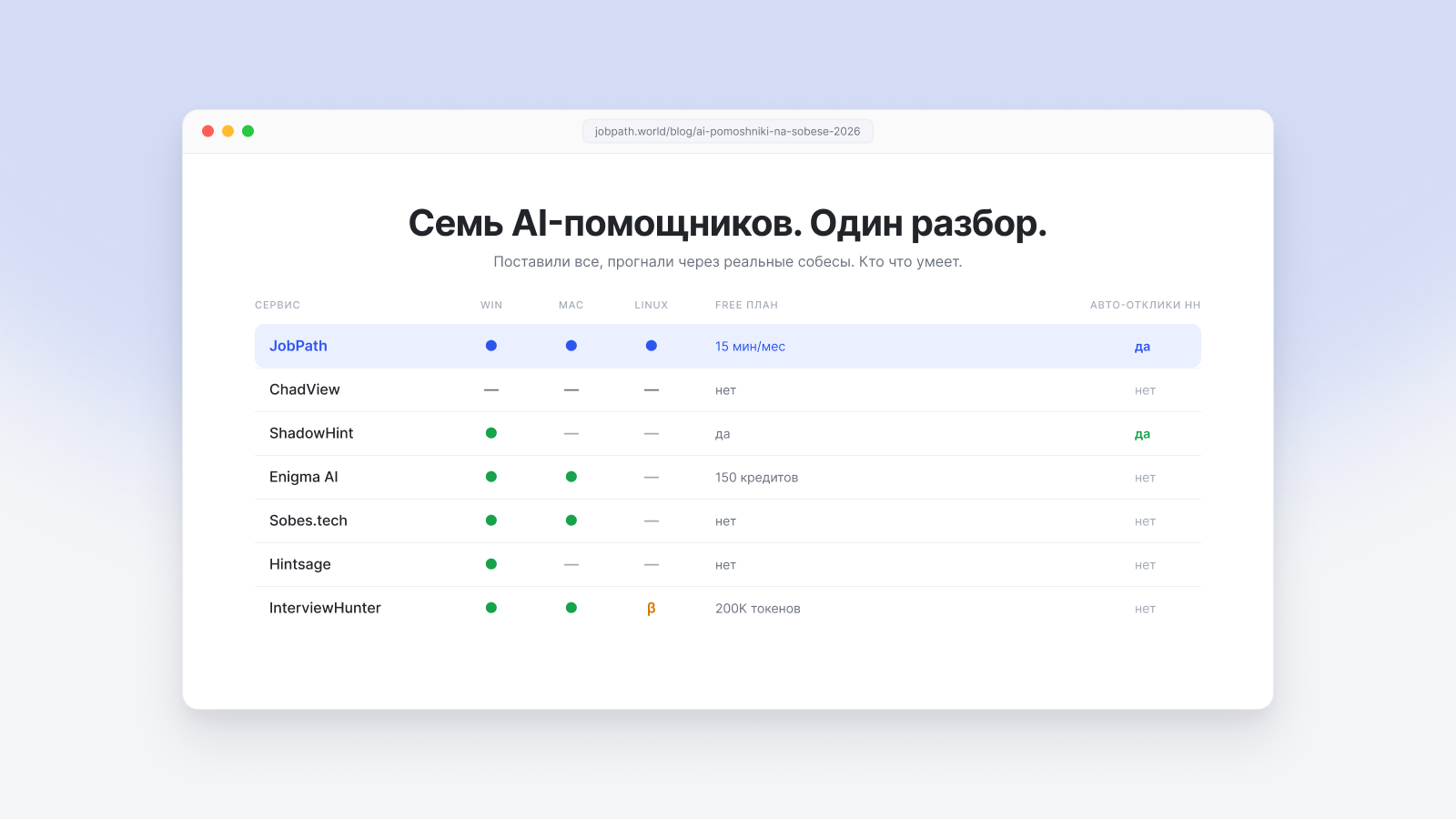
Interview copilots in 2026: six services compared with JobPath
The category of "AI whispers answers during a live interview" exploded in 2025. By 2026 the Russian-speaking market has at least six such products besides JobPath, with nearly identical promises. We installed them, ran them through test calls and real interviews, and broke down where each one is strong and which job it suits.
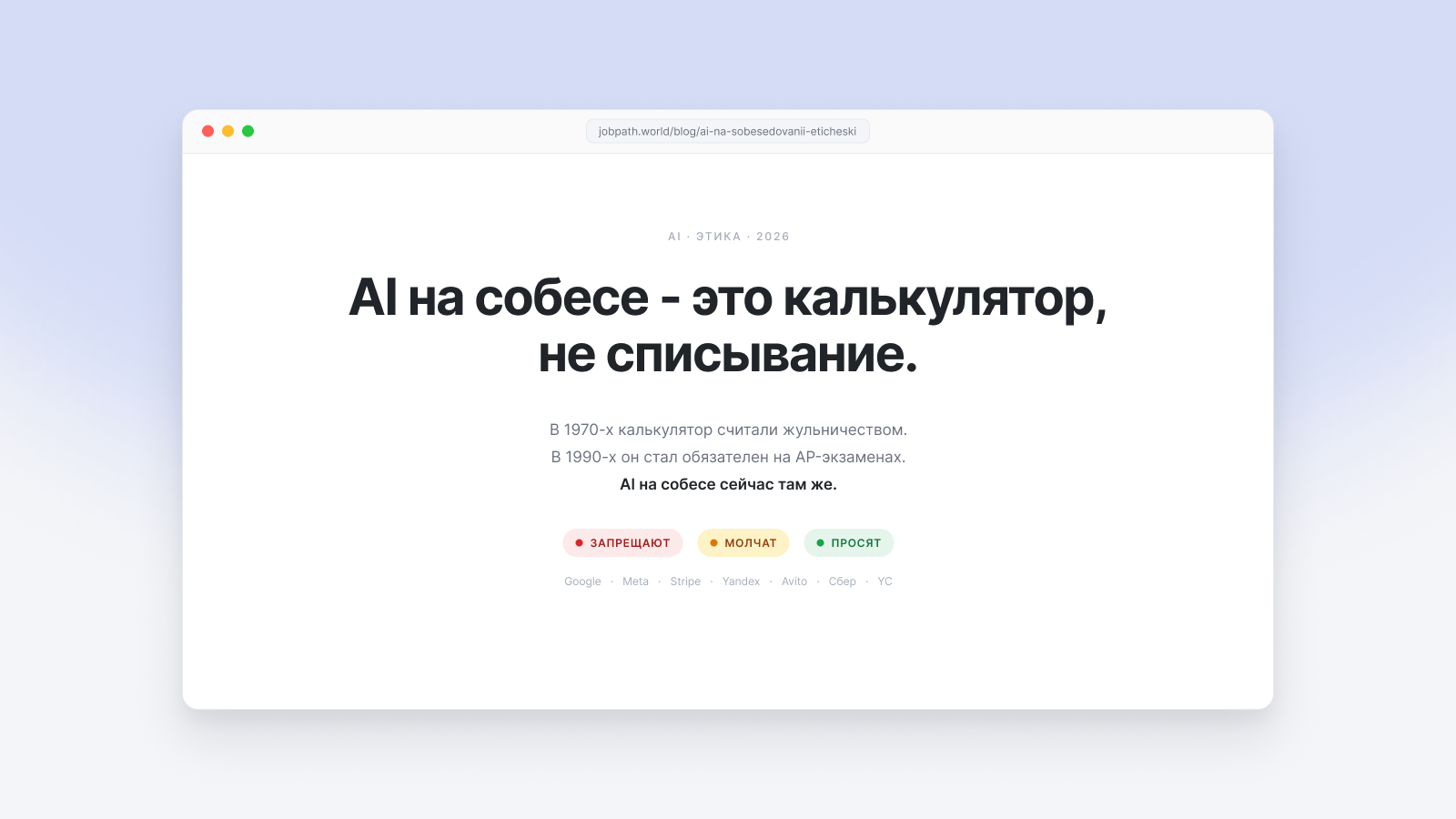
Is using AI in a job interview ethical? What companies allow
There are three kinds of companies: those that explicitly ban AI in interviews, those that stay silent, and those that openly say 'come with the tools you actually use at work.' We map who's who, and explain why the historical parallel here is calculators in math exams, not copying off your neighbor.