Switching interview assistants: browser extension vs desktop app
People replace an interview assistant for five typical reasons, and in four of them the problem isn't the model — it's where the audio lives. The difference between an extension and a desktop app, and what to check before switching.
People replace an interview copilot for five reasons: the price went up, there's no build for their operating system, prompts don't appear during the call, a charge went through and never came back, or the vendor stopped answering email.
The first three are technical and can be checked in advance — before you pay a second vendor and hit the same wall.
The difference that causes most switches
Assistants come in two shapes, and the difference matters more than the model underneath.
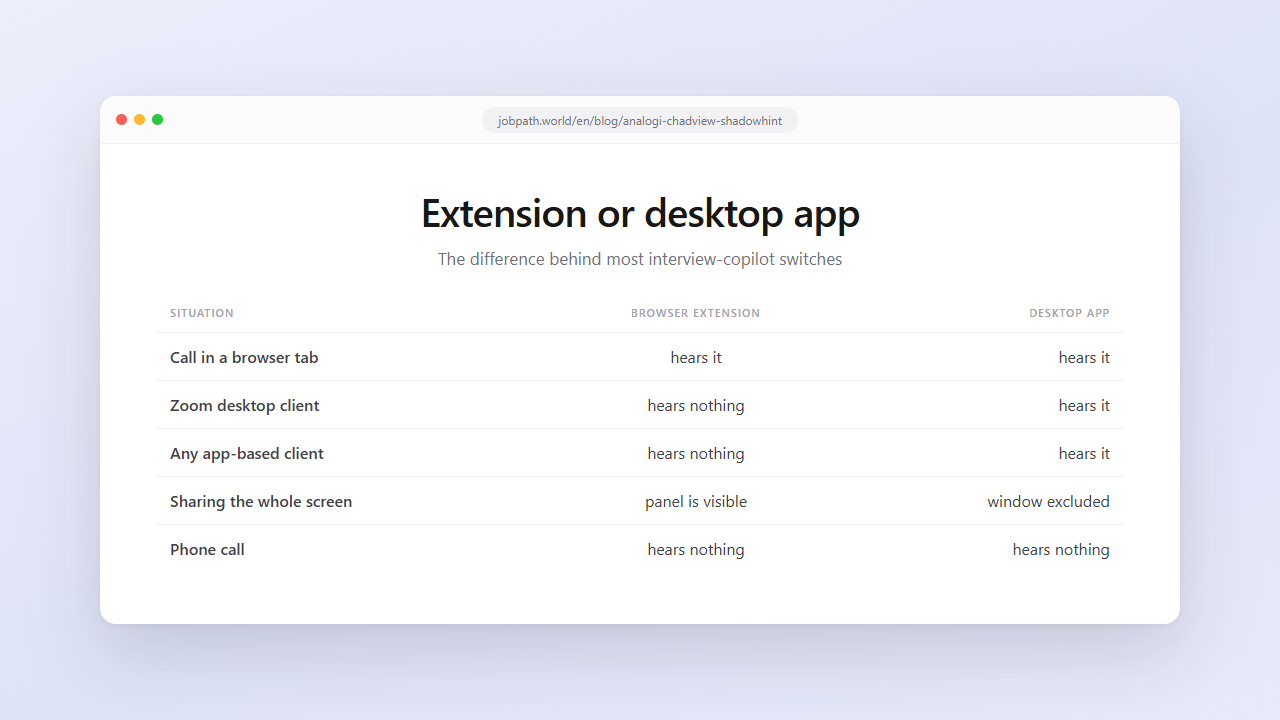
A browser extension listens to the audio of a browser tab. Prompts appear only if the call is running in the browser. The interviewer sends a Zoom link, you open it in the desktop client — the extension hears nothing. Same for any meeting client that opens as an app, and for a phone call.
A desktop app listens to system audio output. It doesn't care where the call is happening: a browser, the Zoom client, Teams, Discord.
The second half of the difference is what happens during screen sharing. An extension's panel lives inside the browser window, so if you share your whole screen or that window, the panel goes out with it. A separate app window is excluded from capture at the operating system level regardless of what you're sharing.
Practical conclusion: if prompts "sometimes don't work", the cause is usually that the call opened in an app rather than a tab.
The pre-switch checklist
1. Use up the subscription you have. Refunds are rare in this category and several vendors state non-refundability outright. If a month is paid for, finish it while testing the replacement on a free tier.
2. Check your OS. Linux builds are rare; several products are Windows-only. If you're on Linux the shortlist collapses to a couple of options.
3. Check where the audio lives. How do you usually join calls — in a tab or in an app? If it's an app, an extension is out by design.
4. Test transcription on your real vocabulary. Say a sentence mixing your working language with English technical terms and read the transcript. That's the main place products break for non-English speakers.
5. Measure latency. More than three seconds between the end of the question and text on screen means you'll have started answering on your own.
6. Confirm there's a free test. Points 3 to 5 can only be checked on a live call. A product with no free tier makes you pay blind.
Where people move to
| If the problem is | Look at |
|---|---|
| The extension can't hear a call in an app | any desktop copilot |
| No Linux build | JobPath |
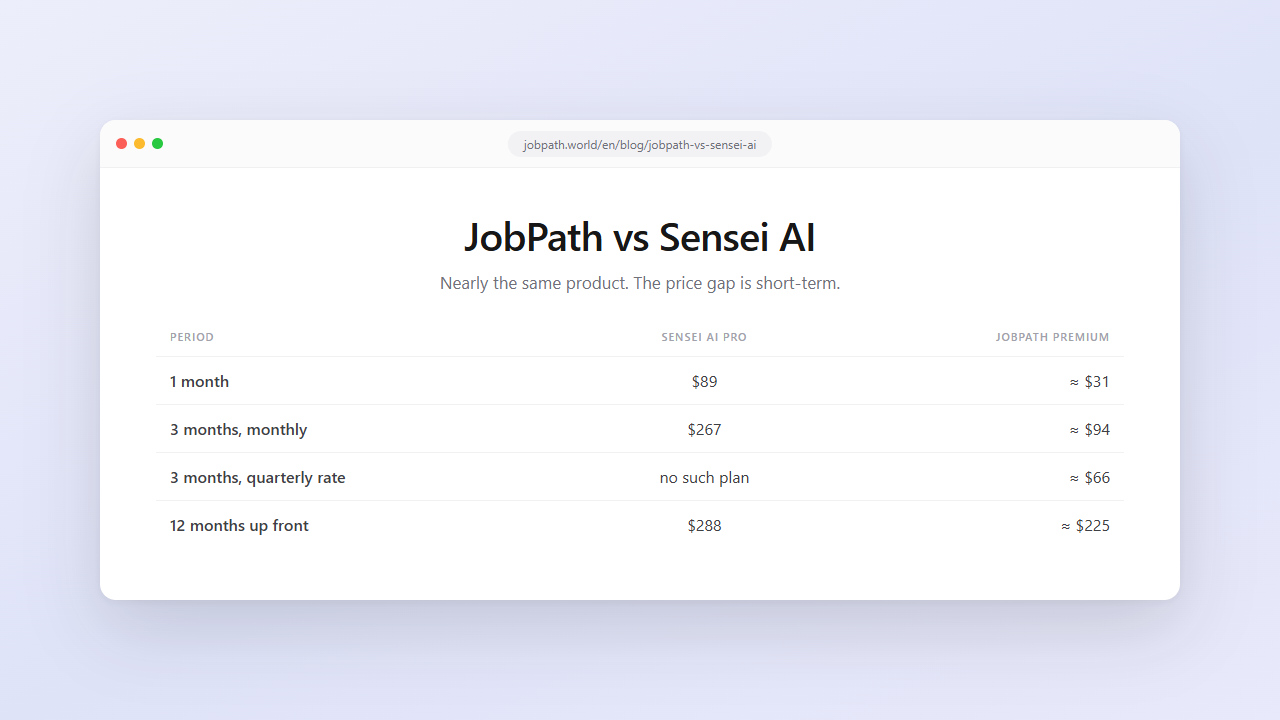
| The price went up | products with short paid periods |
| You need one short period | week-long plans rather than a month |
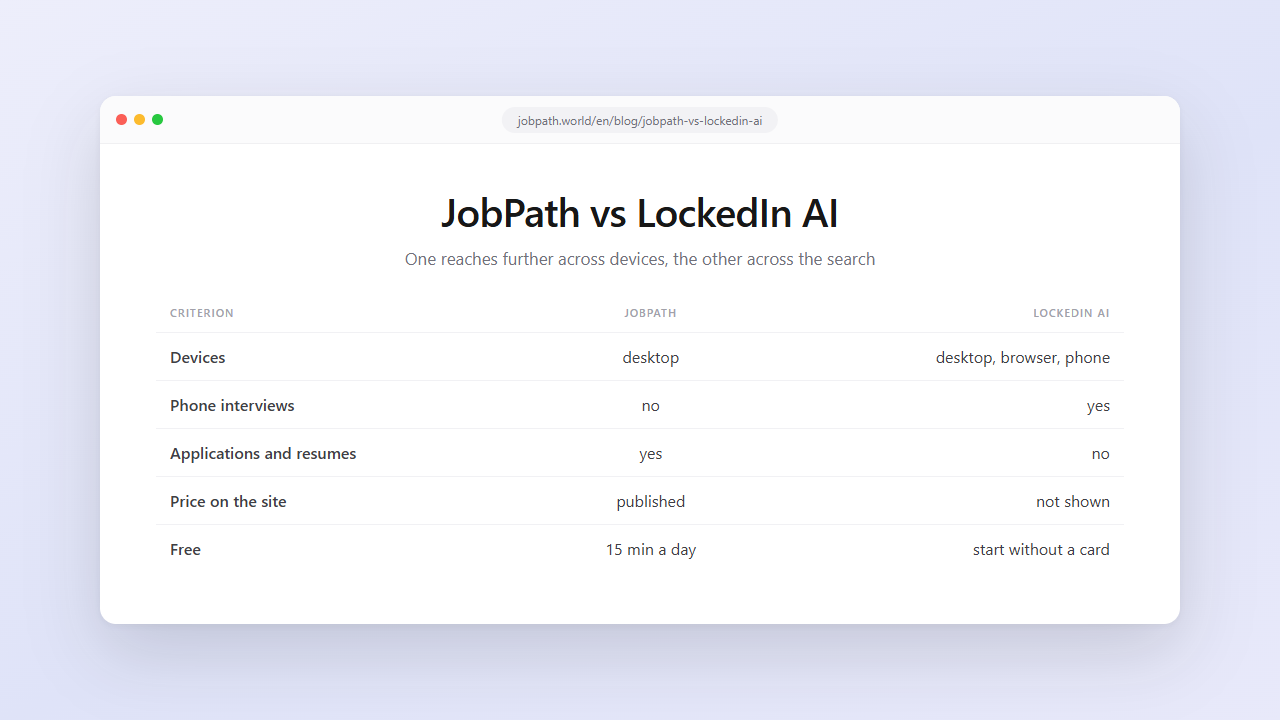
| You also need applications sent | JobPath |
| You want to verify before paying | anything with a free live allowance |
Detailed prices for the western products are in the alternatives breakdown; the Russian-market ones are compared in a separate review.
Prices move fast here
The category reprices every few months, and not always downward. One Russian-market extension we checked at 1,500 ₽ a month in April 2026 is quoted at 3,900 ₽ for an unlimited month by September — we couldn't verify that on their own page, which only serves prices to a browser, so treat it as a ballpark.
The rule that follows: open the pricing page before renewing. "Same as last year" is not a safe assumption in this category.
The common mistake
Changing tools rarely fixes a problem that wasn't the tool.
If interviews fail at the same points every time — the self-introduction, the reason for leaving, the salary question — a new vendor changes nothing. A prompt gives you phrasing, not confidence, and the difference between explaining and reading aloud is audible.
What works is the combination: mock interviews before the call remove the repeating questions, and the prompt stays as insurance for the unexpected. You can test that on a free tier without cancelling anything.
FAQ
Why is a browser extension worse than an app during an interview?
It only hears audio from a browser tab, so it goes silent when the call runs in a desktop client like Zoom, Teams or Discord. Its panel also lives inside the browser window and appears in a full-screen share. A desktop app listens to system audio and renders a window that the OS excludes from capture.
Which interview assistants run on Linux?
Very few — JobPath is the one we know of that ships a Linux build. Most competitors stop at Windows, or Windows and macOS.
Will I get a refund if the assistant doesn't fit?
Refunds are rare in this category and some vendors state non-refundability in their terms. Test on a free tier before paying rather than after.
Can I run two assistants at once?
Technically yes, but on a live call it hurts: two windows with different answers and twice the attention cost. Test the new one on its free allowance while the old subscription runs out.
What should I check first in a new assistant?
Three things, on a live call: whether it hears the client you actually use, how it transcribes your real vocabulary, and how many seconds pass before an answer appears. Everything else is readable on a website; these aren't.